
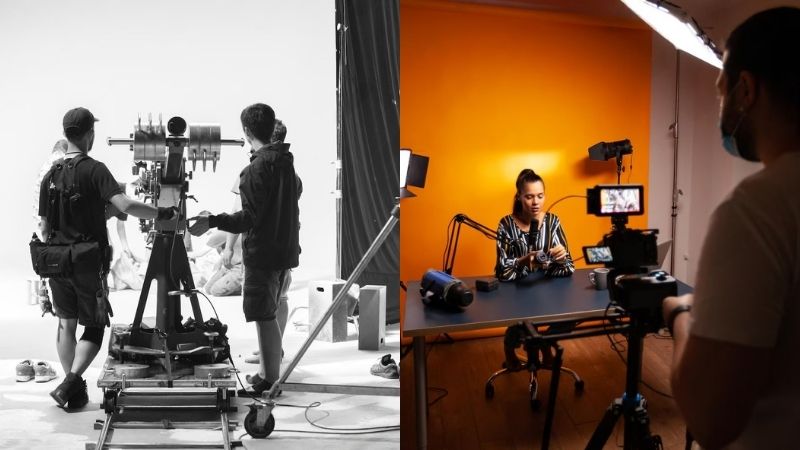
What’s the Difference Between Film and Video?
- Corporate Video Production Team
Inside This Guide
Highlights
✔ Film and video serve different business purposes, even though they overlap visually.
✔ Film focuses on storytelling and emotion; video prioritizes clarity and efficiency.
✔ Video production offers greater flexibility and scalability for most businesses.
✔ Film-style video can elevate brand perception when used strategically.
✔ Choosing the right approach depends on goals, budget, and audience.
If you’re investing in visual content for your business, understanding the difference between film and video can save you money, sharpen your message, and help you choose the right production partner, especially when searching for video production services near me in a competitive market like NYC.
Businesses today rely heavily on video, but many entrepreneurs and decision-makers still use “film” and “video” interchangeably. They’re not the same. Each serves a different purpose, follows a different production approach, and delivers a different return on investment. Knowing how they differ helps you avoid overpaying for what you don’t need, or underinvesting when impact truly matters.
Film vs. Video: The Simplest Definition for Business Owners
What Is Film Production?
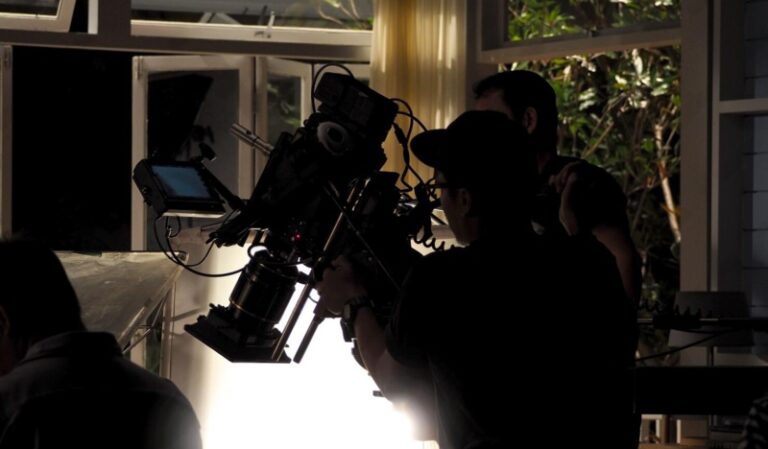
Film production is rooted in cinematic storytelling. It prioritizes emotion, narrative, and visual artistry. Film projects are typically built around scripts, story arcs, detailed shot planning, and a carefully controlled visual style.
For businesses, film production is often used for:
- Brand films
- High-end commercials
- Documentaries
- Mission-driven storytelling campaigns
Film production usually involves longer timelines, larger crews, and higher budgets because every element, from lighting to sound design, is intentional and polished for maximum emotional impact.
What Is Video Production?
Video production is broader and more practical. The video production’s meaning, especially for businesses, focuses on clear communication, efficiency, and versatility across platforms.
Video production commonly includes:
- Corporate videos
- Explainer videos
- Testimonials
- Social media content
- Training and internal communications
- Event recap videos
While video can still look cinematic, it’s often designed to deliver information quickly, support marketing goals, and scale easily across digital channels.
5 Key Differences Between Film and Video Production
1. Purpose and Intent
Film production aims to tell a story that resonates emotionally. It’s about mood, tone, and long-term brand perception. Video production prioritizes clarity and action. It’s designed to inform, educate, or persuade an audience efficiently. For businesses, the question becomes whether you need a powerful brand statement or a clear, results-driven message.
2. Production Process
Film production requires extensive pre-production planning. Scripts, storyboards, casting, and location scouting are critical steps that take time. Video production workflows are typically leaner. Planning still matters, but the process is more flexible, allowing faster turnaround times and easier revisions—important for fast-moving businesses.
3. Visual Style
Film emphasizes cinematic lighting, camera movement, and visual depth. Every frame is crafted to look intentional and immersive. Video production favors a clean, professional look that adapts well to websites, presentations, and social platforms. With the right team, video can still feel cinematic without following a full film workflow.
4. Equipment and Crew
Film productions often require specialized cinema cameras, larger lighting setups, and multiple crew roles. Video production scales more easily. Corporate video production can be handled by smaller, efficient teams using modern, high-quality equipment that still delivers professional results.
5. Budget and ROI
Film production typically costs more due to time, crew size, and post-production complexity. The payoff is a premium brand asset. Video production offers a wider pricing range and often delivers stronger ROI for businesses that need consistent content rather than a single hero piece.
What Businesses Usually Need: Film-Style Video vs. Traditional Corporate Video

Film-Style Corporate Video Production
Film-style video blends cinematic techniques with business messaging. It’s ideal for companies that want to elevate their brand and stand out visually.
Best uses include:
- Brand storytelling videos
- Company culture films
- High-impact campaign launches
Benefits include emotional engagement, higher perceived value, and strong differentiation, especially important in saturated markets like NYC.
Standard Business Video Production
Traditional video production focuses on speed, clarity, and scalability.
Best uses include:
- Product or service explainers
- Customer testimonials
- Recruiting and training videos
- Social media and website content
This approach supports ongoing marketing efforts and keeps your messaging consistent across channels
When to Choose Film Production vs. Video Production
⮞ Choose Film Production If You Want:
- A cinematic, story-driven brand asset
- Emotional connection with your audience
- A long-term marketing centerpiece
⮞ Choose Video Production If You Need:
- Fast, efficient content creation
- Clear communication of services or products
- Multiple videos for different platforms
💡One Question That Helps Decide
Are you trying to impress your audience emotionally, or communicate information clearly and quickly? Most small and mid-sized businesses benefit from a strategic mix of both.
What to Look for When Hiring Video Production Services Near You
Business-Focused Experience
A strong production partner understands business goals, not just cameras. Look for teams experienced in corporate video production who can translate strategy into visuals.
Creative Strategy, Not Just Filming
Effective video production includes concept development, scripting support, and guidance on how the video will be used. Filming is only one part of the process.
Local NYC Expertise
Working with a local team matters. NYC-based production companies understand permits, locations, tight schedules, and the pace of doing business in the city. This local knowledge helps projects move faster and smoothly. When businesses search for video production services near me, proximity, responsiveness, and local insight are often just as important as technical skill.
FAQs About Film vs. Video Production
The main difference between a video and a film is purpose and production approach. Film is traditionally created for cinematic storytelling, with structured narratives, detailed pre-production, and a focus on emotional impact. Video is broader and more practical, designed to communicate information efficiently across platforms like websites, social media, and presentations. In a business context, video production prioritizes clarity, speed, and flexibility, while film emphasizes artistry and storytelling.
Yes, a video can be considered a film if it uses cinematic storytelling techniques, such as scripted narratives, intentional cinematography, and thematic structure. The distinction is less about the recording medium and more about intent and execution. Many modern brand films and documentaries are technically videos but are still considered films because of their cinematic approach.
Video often looks different than film due to differences in frame rates, color rendering, lighting techniques, and post-production choices. Film traditionally has a softer motion blur and more organic color response, while video tends to look sharper and more immediate. However, modern video production can closely replicate a film look through advanced cameras, lighting, and color grading.
A film is typically a professionally produced visual work created with a structured narrative, cinematic visuals, and a clear storytelling purpose. Films are commonly intended for theaters, festivals, or long-form brand storytelling and are defined more by creative intent and execution than by the technology used to record them.
The three most common types of film are feature films, documentary films, and short films. Feature films are long-form narratives, documentaries focus on real people or events, and short films tell a complete story in a shorter format. In a business setting, brand films often borrow elements from documentaries or short films to convey authenticity and impact.
Get the Right Video Style for Your Business in NYC
Understanding the difference between film and video helps you make smarter decisions, avoid wasted spend, and create content that actually works. Whether you need a cinematic brand story or practical business videos, the right production approach makes all the difference.
Corporate Video Production works with NYC businesses, entrepreneurs, and growing brands to deliver video solutions that align with real business goals. If you’re evaluating your options or searching for video production services near me, a professional consultation can help clarify what style and strategy fits your needs best.