
The Complete Video Production Process: Step-by-Step Guide
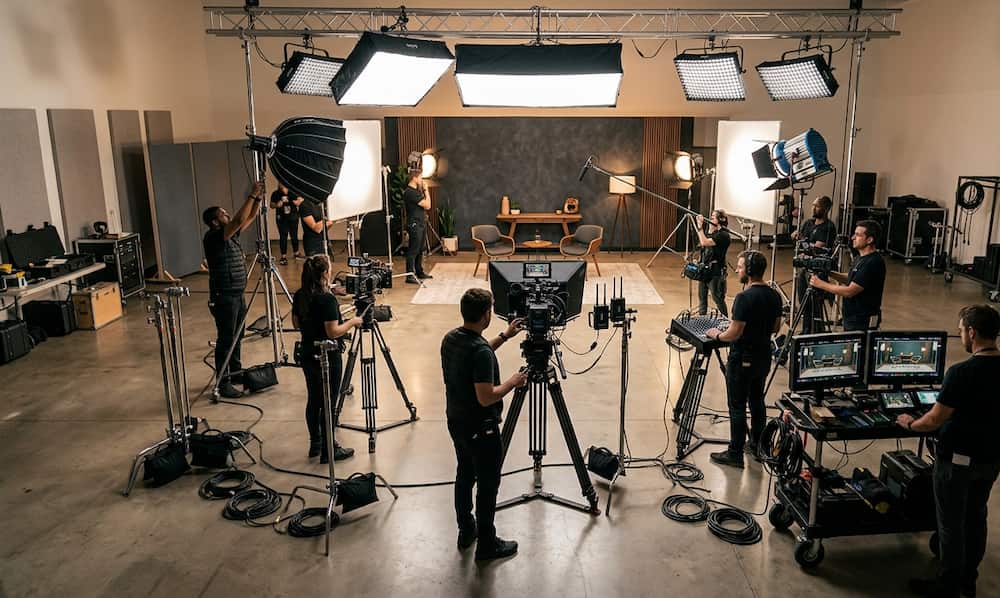
- Corporate Video Production Team
Quick Facts
✔ Video production has three stages: pre-production, production, and post-production.
✔ Strong pre-production planning prevents delays and mistakes.
✔ The production stage captures all footage and audio.
✔ Post-production edits and refines the final video.
✔ A structured process leads to clearer, more effective video content.
What’s In This Guide
Video has become a central tool in modern business communication.
Companies use it to promote products, train employees, and tell brand stories in a clear and engaging format. For businesses in NYC, professional video production has become an essential tool for standing out in competitive markets.
The video production process follows a structured workflow that turns an idea into a finished visual asset. It typically includes three phases: pre-production, production, and post-production. Each stage helps ensure the video is well planned, professionally executed, and aligned with business goals.
Understanding this process allows organizations to plan projects more effectively and produce videos that communicate their message with clarity and impact.
What Is the Video Production Process?
The video production process is the organized workflow used to create professional video content from concept to final delivery. It includes planning, filming, editing, and distributing the finished video.
Unlike casual recordings, professional video production combines storytelling, technical expertise, and strategic messaging. According to research from HubSpot, video is one of the most effective content formats for increasing engagement, building trust, and improving conversion rates.
The production process generally includes three major phases:
⮞ Pre-production
Planning and preparation before filming begins.
⮞ Production
Capturing footage, interviews, and supporting visuals.
⮞ Post-production
Editing, refining, and finalizing the video.
Each phase builds on the previous one. Skipping or rushing any step often results in lower production quality and unclear messaging.
Why Businesses Should Understand the Video Production Workflow
Even when hiring a professional production team, businesses benefit from understanding the video production workflow.
Better Project Planning
Video projects involve timelines, equipment, and multiple creative decisions. Knowing the process allows organizations to set realistic schedules and budgets before production begins.
Clearer Communication With Production Teams
Understanding the workflow helps businesses collaborate more effectively with directors, videographers, and editors. Clear communication reduces revisions and ensures everyone shares the same creative vision.
Higher Quality Results
Strong planning improves filming efficiency and reduces the need for costly reshoots. Every stage of the process contributes to better visual storytelling.
More Effective Business Messaging
When companies define their goals early in the process, the final video communicates a focused message that resonates with the intended audience.
Step-by-Step: The Complete Video Production Process
Step 1: Define the Video’s Objective
Every successful video project begins with a clearly defined goal. The objective determines the structure, tone, and distribution strategy.
Common business objectives include:
- Building brand awareness
- Promoting products or services
- Recruiting new employees
- Training internal teams
- Explaining complex processes
The target audience should also be identified at this stage. A product launch video aimed at potential customers requires a different approach than an internal training video.
Clear objectives ensure that every production decision supports the overall purpose of the video.
Step 2: Concept Development and Creative Planning
Once the goal is defined, the next step is to develop the creative concept.
This stage determines how the message will be presented visually and emotionally. The concept outlines the story structure, visual style, and tone of the video.
Key decisions may include:
- Narrative storytelling versus interview format
- Live action versus animation
- Formal corporate tone versus conversational style
- Visual branding and aesthetic direction
Creative planning ensures the video communicates the intended message while maintaining audience engagement.
Step 3: Scriptwriting and Storyboarding
Scriptwriting converts the concept into a structured narrative. It defines dialogue, voice-overs, interview questions, and scene sequences.
A strong script keeps messaging concise and ensures the video remains focused on its objective.
Storyboarding adds a visual layer to the script. It maps out each scene and camera angle using simple sketches or digital layouts.
Benefits of storyboarding include:
- Clarifying the visual flow of the story
- Helping directors plan shots and transitions
- Identifying potential production challenges before filming
This stage reduces uncertainty during filming and improves efficiency on set.
Step 4: Pre-Production Logistics
Pre-production is often the most detailed phase of the entire process. It involves organizing all the elements required for a successful filming day.
Key tasks include:
- Location scouting
Selecting filming locations that match the visual concept and provide suitable lighting and acoustics.
- Casting talent
Choosing presenters, actors, or employees who will appear on camera.
- Equipment planning
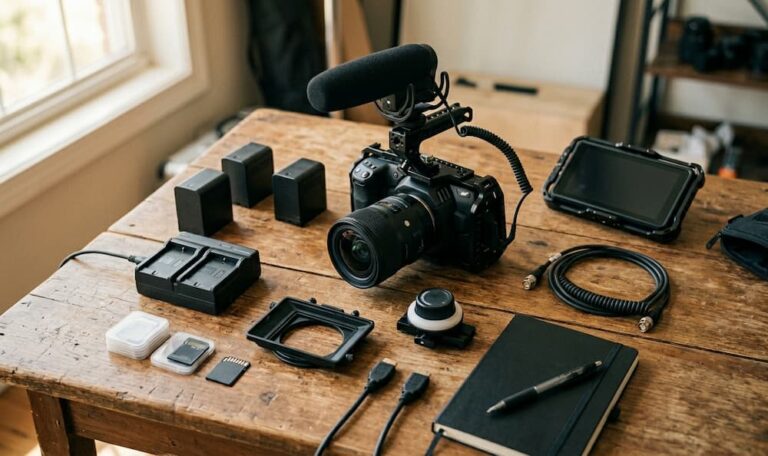
Determining the cameras, lighting equipment, microphones, and stabilization tools needed for the project.
- Production scheduling
Creating a shooting schedule that coordinates crew members, locations, and talent availability.
Thorough pre-production planning minimizes delays and ensures filming runs smoothly.
Step 5: The Production Phase (Filming)
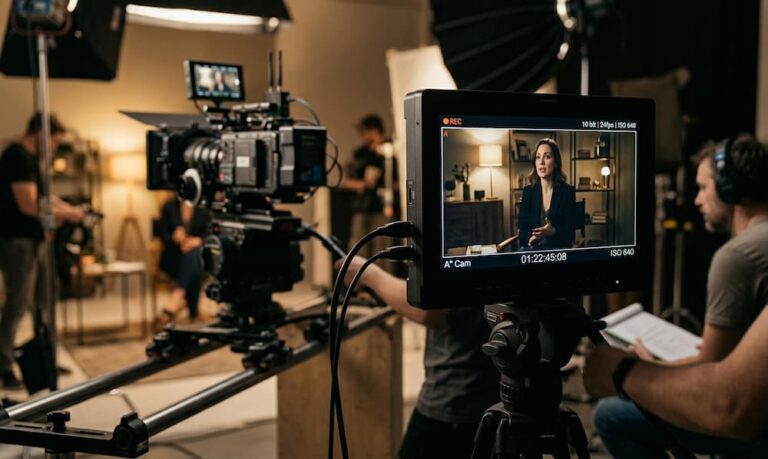
The production phase is where all planning becomes reality. During this stage, the crew captures the video footage and audio needed for the final project.
Typical activities include:
- Setting up lighting and camera equipment
- Directing presenters or interview participants
- Recording multiple takes to ensure quality
- Capturing supporting footage known as B-roll
B-roll includes additional shots such as product demonstrations, workplace scenes, or environmental visuals. These clips help editors create smoother transitions and visual variety.
Production teams often include directors, camera operators, sound technicians, lighting specialists, and assistants who coordinate the shoot.
Step 6: Post-Production and Editing
Post-production transforms raw footage into a polished final video.
Editors review all recorded material and select the strongest clips. They then assemble scenes into a cohesive narrative that aligns with the original script.
Typical post-production tasks include:
- Video editing and scene sequencing
- Color correction to balance lighting and tones
- Audio mixing for clear dialogue and balanced sound
- Adding music, titles, and graphics
- Integrating brand elements such as logos and animations
Step 7: Final Review and Distribution
Once editing is complete, the video enters the final review stage.
This step verifies that the video meets quality standards and accurately communicates the intended message.
Teams typically review:
- Visual clarity and color consistency
- Audio quality and balance
- Branding accuracy
- Captioning or subtitles if needed
After approval, the video can be distributed through multiple channels such as company websites, social media platforms, digital advertising campaigns, and internal training systems.
Strategic distribution ensures the video reaches the right audience and delivers measurable impact.
Common Types of Corporate Videos Businesses Produce
Professional video production supports a wide range of business needs.
- Brand story videos introduce a company’s mission, values, and culture.
- Promotional videos highlight products or services and are commonly used in marketing campaigns.
- Training videos help standardize onboarding and employee education across organizations.
- Customer testimonial videos showcase real client experiences and strengthen brand credibility.
- Event videos capture conferences, product launches, and corporate gatherings for marketing or archival use.
Each type of video serves a specific communication goal and benefits from professional planning and production.
Frequently Asked Questions About Video Production
How long does the video production process take?
The timeline varies depending on the complexity of the project. Simple videos may take a few weeks, while larger productions involving multiple locations or extensive editing may take several months.
How much does professional video production cost?
Costs depend on factors such as video length, equipment requirements, filming locations, and crew size. Larger marketing campaigns typically involve higher production budgets than internal training videos.
What makes a corporate video effective?
Effective corporate videos share several qualities. They present a clear message, tell a compelling story, maintain high visual and audio quality, and target a specific audience.
Can businesses produce videos internally?
Some organizations create simple videos in-house. However, professional production teams bring technical expertise, advanced equipment, and creative direction that significantly improve video quality and storytelling.
Bring Your Vision to Life With Professional Video Production
Creating an effective business video requires strategy, planning, and technical expertise at every stage of the production process. From concept development to final editing, each step contributes to a video that informs, engages, and communicates a clear message.
Organizations that follow a structured production process are better positioned to create content that strengthens their brand and connects with their audience.
For companies ready to produce high-quality visual content, Corporate Video Production provides the expertise and production capabilities needed to turn ideas into professional videos that deliver real business value.