
What’s in This Guide
- Start by Mapping the Experts and Roles Most at Risk
- Define the Tacit Knowledge Worth Capturing
- Run Structured Expert Interviews on Camera
- Turn Interviews Into Searchable Chapters and Transcripts
- Prepare the Library for Internal AI and RAG Search
- Protect Trust With Consent, Confidentiality, and Review
- Put the Captured Knowledge to Work
- Frequently Asked Questions
- Capture Your Experts’ Knowledge Before They Retire
Every Connecticut business has at least one person who just knows. They know which press runs hot in July, which long-time client needs a call before the invoice goes out, and which workaround keeps the line moving when the manual says it shouldn't. When that person retires, the knowledge leaves with them, and no onboarding binder brings it back.
The timing is not abstract. Connecticut has one of the nation's oldest workforces, with 27.4 percent of its labor force aged 55 or older. An earlier analysis from the Connecticut Department of Labor found that more than 35 percent of manufacturing workers were already past age 54. A corporate video production company can help you capture that experience before it walks out the door.
The goal is not a retirement tribute reel. It is a structured knowledge transfer video library that new hires can search, watch, and trust.
Key Takeaways
- Tacit knowledge is the real risk. Judgment calls, troubleshooting, customer history, equipment quirks, exceptions, and lessons learned rarely live in manuals.
- Start with the people most at risk. Retirement timing, single points of failure, and undocumented roles set the priority list.
- Structured interviews beat casual chats. A subject-aware interviewer and filming at the workstation surface what experts cannot easily explain.
- Structure makes video searchable. Transcripts, topic-based chapters, and metadata turn recordings into a usable knowledge base.
- Trust protects the program. Voluntary participation, written consent, and expert review keep the content credible and the process respectful.
Start by Mapping the Experts and Roles Most at Risk
Not every retiring employee holds knowledge that is hard to replace. Begin with a short list of people whose departure would slow production, strain customer relationships, or leave a gap no one else can fill.
- Retirement horizon. Experts within a few years of retiring go first.
- Single points of failure. Anyone who is the only person who understands a system, machine, or account moves up the list.
- Undocumented work. Roles where the real process differs from the written procedure carry the most hidden value.
The pattern applies well beyond factory floors, from claims specialists at Hartford insurers to plant engineers in the Naugatuck Valley and quality leads in shops along the Connecticut River.
Treat it as part of broader continuity planning. It is the same mindset behind a hurricane preparedness video built for Miami businesses, where the goal is keeping people informed before disruption hits.
Define the Tacit Knowledge Worth Capturing
Institutional knowledge sits in two layers. Explicit knowledge lives in manuals, SOPs, and software systems. Tacit knowledge lives in experience, and a 2025 research paper on preserving tacit knowledge describes it as deep, experience-based insight that is hard to articulate but vital for decision-making and problem-solving. That is exactly the layer a manual misses.
Focus expert knowledge capture on six areas:
- Judgment calls. How the expert decides when the data is incomplete or the options are close.
- Troubleshooting. The first signs of trouble and the order of the fixes.
- Customer knowledge. Preferences, history, and sensitivities that never made it into the CRM.
- Equipment quirks. The sounds, settings, and workarounds that keep a machine running.
- Exceptions. When the rule bends, who approves it, and why.
- Lessons learned. What went wrong in the past and what changed because of it.
Customer knowledge deserves extra attention, because the strongest B2B video programs depend on credible expert voices and account history often lives in one person's memory.
Run Structured Expert Interviews on Camera
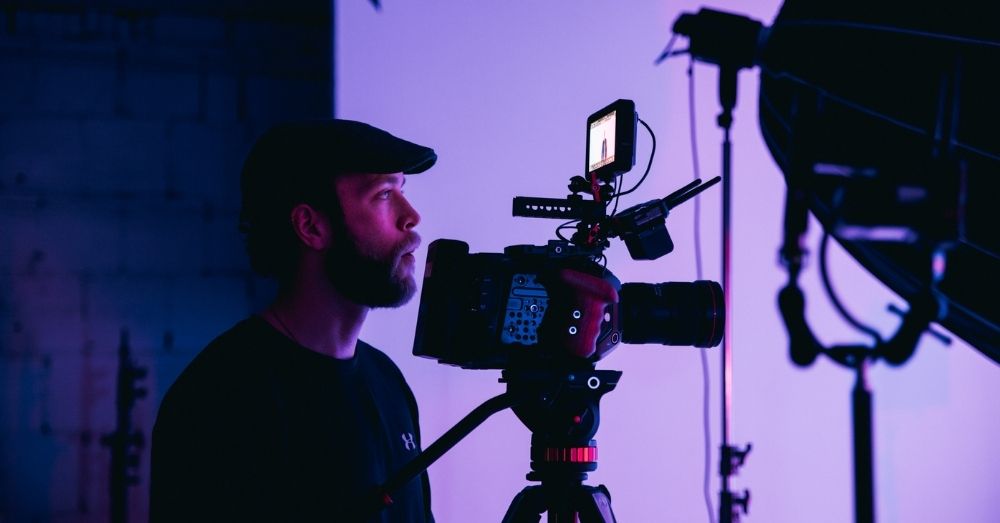
Structured interviews are the core method for pulling experience out of an expert’s head and into a form others can use. Done well, they turn casual stories into clear, reusable guidance that new hires can learn from.
A corporate video production company brings the structure that makes those sessions productive:
- A subject-aware interviewer. Someone who understands the work asks better follow-up questions than a generalist.
- Filming at the workstation. Experts can demonstrate the fix instead of describing it.
- Clean audio and clear framing. A wide shot shows the process, and a close shot shows the detail.
The planning discipline behind strong corporate video programs applies here: define the outcome first, script the questions second, and choose the shots last.
Questions that surface tacit knowledge tend to sound like this:
- What is the first sign that something is about to go wrong with this process or machine?
- Describe a time a standard procedure failed. What happened instead?
- Which steps in the manual are technically correct but not how the work really gets done?
- What do new hires most often get wrong, and how can they spot it early?
- Which equipment quirks, sounds, or settings never appear in documentation?
- Which customers or vendors need special handling, and why?
- When does an exception make sense, and who needs to approve it?
- What lesson cost the company the most to learn?
- Who else knows this, and who should know it but does not?
- If a new hire inherited this role tomorrow, what three things must they learn first?
Turn Interviews Into Searchable Chapters and Transcripts
A two-hour interview is hard to search and harder to reuse. Structure fixes that:
- Transcribe with speaker labels and timestamps.
- Segment by single topic, with chapters of roughly two to five minutes.
- Title each chapter with the question it answers, such as "How do you spot a failing die before it scraps a run?"
- Tag each chapter with process, equipment, customer, expert, date, and review status.
- Summarize each chapter in a few lines, including cautions and exceptions.
- Verify technical accuracy with a second expert before publishing.
|
Asset |
What it contains |
Best use |
|
Full interview video |
The complete session |
Archive and source of truth |
|
Chapter clips |
One topic, 2 to 5 minutes |
Training and quick reference |
|
Timestamped transcript |
Speaker-labeled text |
Search, captions, indexing |
|
Summary card |
Key points and cautions |
Fast scanning and sign-off |
|
Metadata tags |
Process, equipment, customer, date |
Filtering and retrieval |
Prepare the Library for Internal AI and RAG Search

Retrieval-augmented generation (RAG) is an approach where an AI assistant pulls relevant passages from approved company content before it answers a question. The same research paper lists RAG among the technologies for integrating organizational knowledge. For a video library, transcripts do the heavy lifting.
A few habits make that content usable:
- Keep chapters single-topic so retrieved passages stay complete and in context.
- Clean the transcripts by fixing equipment names, part numbers, and acronyms.
- Attach metadata so answers can point back to the source chapter and timestamp.
- Set access controls so sensitive material reaches only the right roles.
- Review before indexing, because an AI tool is only as reliable as the content behind it.
Clear headings and transcript-backed pages follow the same principles that help businesses get cited by AI search, applied to internal tools instead of public ones. Internal AI can still make errors, so link every answer back to the source video.
Protect Trust With Consent, Confidentiality, and Review
The research paper also notes that employees often hesitate to share tacit knowledge without assurance of confidentiality and appreciation. Process design should answer that concern directly:
- Voluntary participation. Invite experts with respect for their career, and have HR and legal review how participation is requested so it never reads as pressure to retire.
- Written consent. Releases should cover recording, internal use, and any external distribution.
- Confidentiality review. Flag trade secrets, customer data, and safety-critical or export-controlled content before anything is published.
- Dated, reviewed content. Label each chapter with its record date and reviewer, and update it when processes change.
This is general information, not legal advice. Confirm recording, consent, and intellectual property requirements with qualified counsel.
Put the Captured Knowledge to Work
A library nobody watches preserves nothing. Build it into onboarding, role-specific training paths, and a searchable internal hub. Short chapter clips work well as just-in-time reference on a shop-floor tablet or a desktop between tasks.
Some insights, once approved and stripped of confidential detail, can also support public thought leadership. A video seeding plan that puts approved expert clips before buyers helps that content reach the audiences who value it.
Frequently Asked Questions
How much does a knowledge transfer video project cost in Connecticut?
Cost depends on how many experts you capture, the number of filming locations, interview length, transcription, chapter editing, and tagging. A single-expert pilot costs far less than a department-wide library. A corporate video production company can scope a pilot first so you see the process before expanding.
How long does it take to capture an expert’s knowledge on video?
Plan for several weeks from kickoff to usable chapters. Interview prep, filming, transcription, editing, and subject-matter review each take time, and the review step is often the longest. Starting years before the retirement date leaves room to revisit topics.
What if a retiring employee is uncomfortable on camera?
Reluctance is common and manageable. A small crew, a familiar workspace, and a pre-interview conversation help. Some experts prefer a demonstration at the machine over a formal sit-down, and some start with audio only. Offering options respects their comfort and usually improves the content.
Can a corporate video production company film in a secure or industrial facility?
Yes, with planning. Crews can follow site safety rules, wear required protective equipment, work around production schedules, and sign NDAs. Share restricted areas, camera limits, and security requirements early so the shoot plan fits them.
Does a knowledge transfer video replace mentoring and shadowing?
No. Video preserves and scales an expert’s explanations, but hands-on mentoring builds skill and judgment through practice. The strongest programs combine both, using recorded chapters to support shadowing rather than replace it.
Capture Your Experts’ Knowledge Before They Retire
Your most experienced people already hold the answers your next hires will need. At Corporate Video Production, we help Connecticut organizations plan, film, and organize expert interviews into searchable knowledge libraries.
Our team handles interviewer preparation, on-site production, transcripts, and chapter structure, so your experts can share what they know without disrupting the work.
Related Posts